
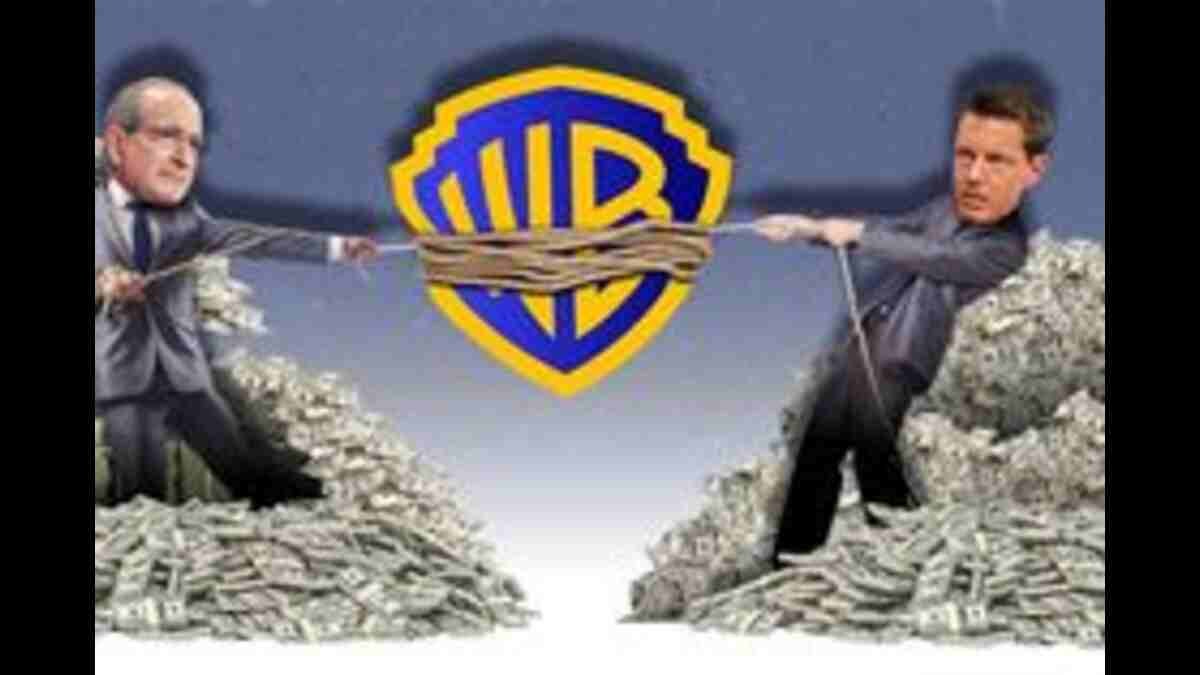

One major step in a new movie is taking place that will affect the whole entertainment industry, as a group of states has already taken to court to block the big merger of the company Paramount and the company Warner Bros Discovery. This lawsuit, which has been fought in an almost life-threatening manner, reveals and highlights the increasing fear of monopolies in the media world and the possible effect it would be on the media consumers, producers of contents, and even market competitiveness for a sector where domination has already been a norm. As streaming wars are becoming more intense and traditional TV formats are slowly changing, this case will likely set the direction for how storytelling will reach our screens in the future. It is said that if the merger goes ahead, both Paramount and Warner Bros Discovery will combine their forces to give rise to a new entity of unprecedented size and power in the entertainment business, one that would own a massive catalog of old and new films, television shows, etc. Paramount has well-established series and TV networks, and it gives fans of their productions access and satisfaction, at the same time Warner Bros Discovery has such legendary names as HBO, CNN, and DC Comics for the public of their respective fans. The two companies together would have such a vast marketshare that it would be unimaginable and cause a big fuss by the regulatory bodies and even the Attorney Generals who say the whole thing would lead to a monopoly situation and unfair competition. The government bodies claim it would be a win-win if companies compete, but if they have too much power, consumers will have to suffer higher prices, limited choices, and no innovations in film and television production.
For regular viewers, it is not an abstract issue only but a reality. Many families consume the contents of media produced for them by the very two companies to watch the programs they enjoy, movies for which they queue up in front of theatres, and the live sporting events they follow. A powerful corporation could easily reduce the diversity of movies and programmes offered and dictate tastes, and so, that is a real concern for independent filmmakers who do not have resources equal to the giant conglomerates. This action also brings out the larger issue of the need to have the balance right, between allowing companies to expand their operations and the protection of the creative field which has generated so many of our favorite artistic outputs. People who follow and are working in the movie industry tell us that merger talks are really difficult ones because, in the first step, the decision is to find out exactly the two players in the game, which is the company Paramount and the other giant, Warner Bros Discovery to which the other players may have to look if they want some business to take place. The companies may get some financial help if they merge because of Really they are in an environment were it is a lot difficult to make a profit with every customer, they have been experiencing a big drop in numbers of paying customers and on the other side they have higher demands when it comes to producing and they may even get a chance of making good profits from all around the world.
Besides that, the legal action is another proof that enforcement of regulations against monopolistic activities is getting back to the frontlines when talking about digital media consumption. The states are acting when federal regulatory bodies are not active enough or may have lost track of local players and consumers, which allows a market that can cause a monopolistic situation in their areas. This dispute is set to focus heavily on the availability and demand for different kinds of contents and the likely outcome of changes in advertising and subscription rates. Still, more than the figures of the trade and business, entertainment also deals with and changes our cultural perspectives, for example the way movies and series can lead a public into a certain understanding or a certain type of fashion, etc. besides it can work as a very good way for people to get the mind off when they are undergoing personal or societal hardships. A smaller range of entertainment options in the market could easily lead to repetitive stories and characters coming into public view, that is, there wouldnt be much space for new ideas in the industry to be developed. Those who support the idea of a vibrant market where artists are allowed to express themselves in various ways and not necessarily only to be directed by the company that owns them or is the majority shareholders.
Meanwhile, both companies have to go on working while they also have to prepare to defend themselves if a trial is ordered and they have to see if other ways to the merger can be found. As for the employees working the studios and networks, they are just watching the developments and hoping for their jobs and at the same time waiting for them to get the creative work going. Meanwhile, fans are discussing online very animatedly, the best outcome would be the situation where, their favorite franchises are still around and the selection is broadened at the same time. At this moment, no company, no business, and no organization could be immune to a situation where there is going to be a change because of a new development in the market. So, the legal decision for the possible merger case might bring about changes in the direction the industry players take.