
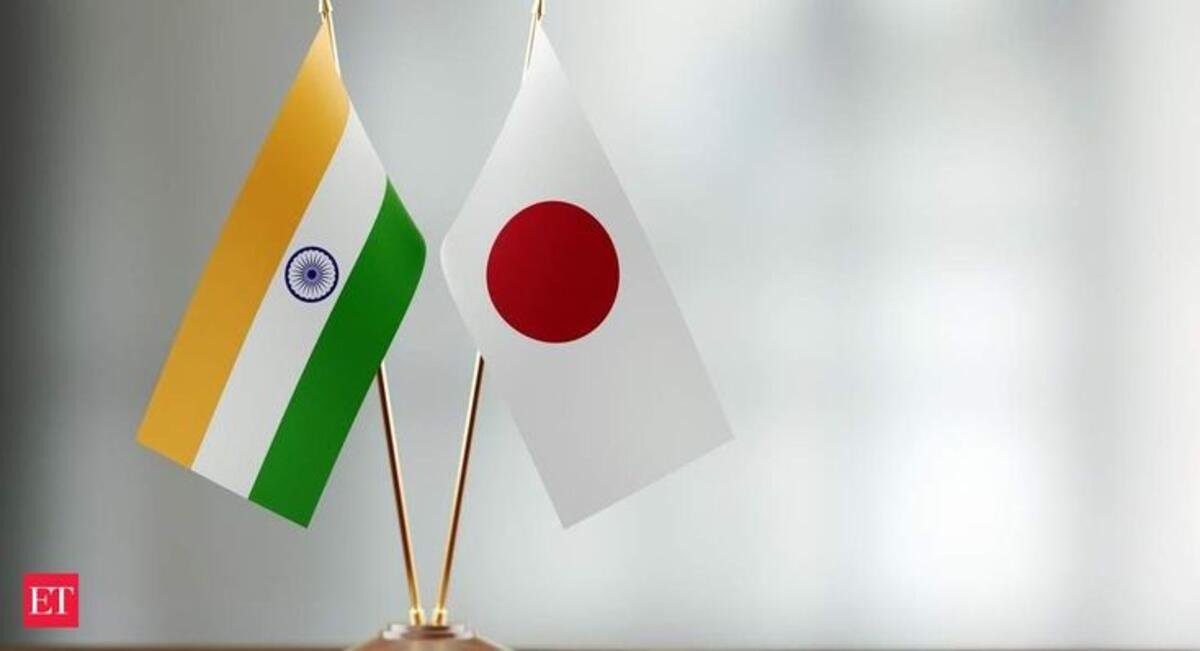

At a time when global capital flows are navigating uncertainty and geopolitical tensions, Japanese investors are increasingly eyeing India’s markets as a core destination for strategic expansion, marking a significant shift in foreign investment patterns and signalling confidence in India’s long-term growth story.
Recent developments illustrate that Japanese financial institutions and corporations are actively deploying capital into India across multiple sectors, especially banking and financial services. In late 2025 and early 2026, Japanese megabanks have accelerated their investments: Mizuho Financial Group’s acquisition of a majority stake in Indian investment firm Avendus Capital is one such high-profile deal that reflects this trend. Mizuho’s strategic aim is to develop an India-Japan investment corridor connecting India, Japan, the United States, and Europe, using the combined banking expertise of both firms to support cross-border capital flows and dealmaking.
This wave of capital is not limited to a single agreement. Mitsubishi UFJ Financial Group (MUFG) is preparing to invest over ¥500 billion (around $3.2 billion) for a strategic share in Shriram Finance Ltd, while Sumitomo Mitsui Financial Group (SMFG) has become a dominant shareholder in Yes Bank Ltd, showcasing broad interest from Japanese financial giants in India’s rapidly transforming banking sector.
Japan’s interest in India goes beyond traditional manufacturing or automotive investments — it now strongly encompasses financial services, technology and infrastructure, reflecting India’s evolving economic profile. Japan already ranks among India’s top sources of foreign direct investment, with cumulative FDI reaching over $43 billion between April 2000 and September 2024. While Japan’s share represents around 6 percent of total equity inflows into India, this historical footprint now serves as a platform for more dynamic investment activities, particularly in new growth domains.
One key driver of this trend is the economic contrast between the two countries. Japan’s economy is characterized by a mature market with low interest rates and limited domestic high-growth investment opportunities. By contrast, India’s expanding middle class, rising credit penetration, youthful demographics and ongoing financial sector reforms are creating a compelling case for Japanese capital to seek higher returns in Indian markets. Institutions are no longer treating India as a peripheral market — many see India as the “new frontier” for global expansion.
This mutual economic interest has also been actively supported at the diplomatic level. Government engagements and bilateral dialogues have reinforced Japan’s commitment to India as a long-term strategic partner. The two countries have previously agreed on broad investment cooperation frameworks that focus on sectors such as infrastructure, technology and capacity building — further laying the groundwork for private capital flows.
The implications of this surge in Japanese investment are considerable for India’s markets. Financial institutions backing India’s banks and investment firms help strengthen capital markets liquidity, support credit growth, and introduce institutional investment strategies that can attract other global investors. As Japanese capital integrates with India’s financial ecosystem, the flow of new capital into equities, corporate credit and digital finance sectors is expected to rise, enhancing market depth and broadening the investor base.
On the Indian side, this influx of capital aligns with the broader narrative of the domestic economy asserting itself on the global stage. India’s sustained economic expansion has seen it emerge as the world’s fourth-largest economy, drawing global attention from investors seeking diversification beyond traditional Western markets. Japanese investors appear to be capitalizing on this moment.
Yet, while Japanese capital is flowing in, global investment trends still reflect caution around geopolitical tensions and portfolio reallocations — factors that have led to mixed foreign flows into Indian equities overall. Despite this, the strategic movement of Japanese institutional capital into long-term investments reflects confidence in India’s growth fundamentals, structural reforms and expanding consumer markets.
As Japanese investors deepen their footprint, India’s markets are set to benefit from increased financial collaboration, innovation in investment products and stronger global links — creating a new chapter in a long-standing economic relationship that now looks poised for acceleration.